For a long time, craft occupied an uncertain place within cultural institutions. It was respected and often appreciated, but it was not always treated as part of the central artistic conversation. Painting, installation, film, and concept-driven exhibitions usually stood closer to the institutional spotlight, while ceramics and other craft-based practices were more often placed in the background as educational, local, or supplementary forms. That is why an event like A Potters’ Fair in Penrith matters. It is not simply a pleasant addition to a gallery calendar. It signals a broader shift in how regional institutions understand culture, audience engagement, and the value of making.
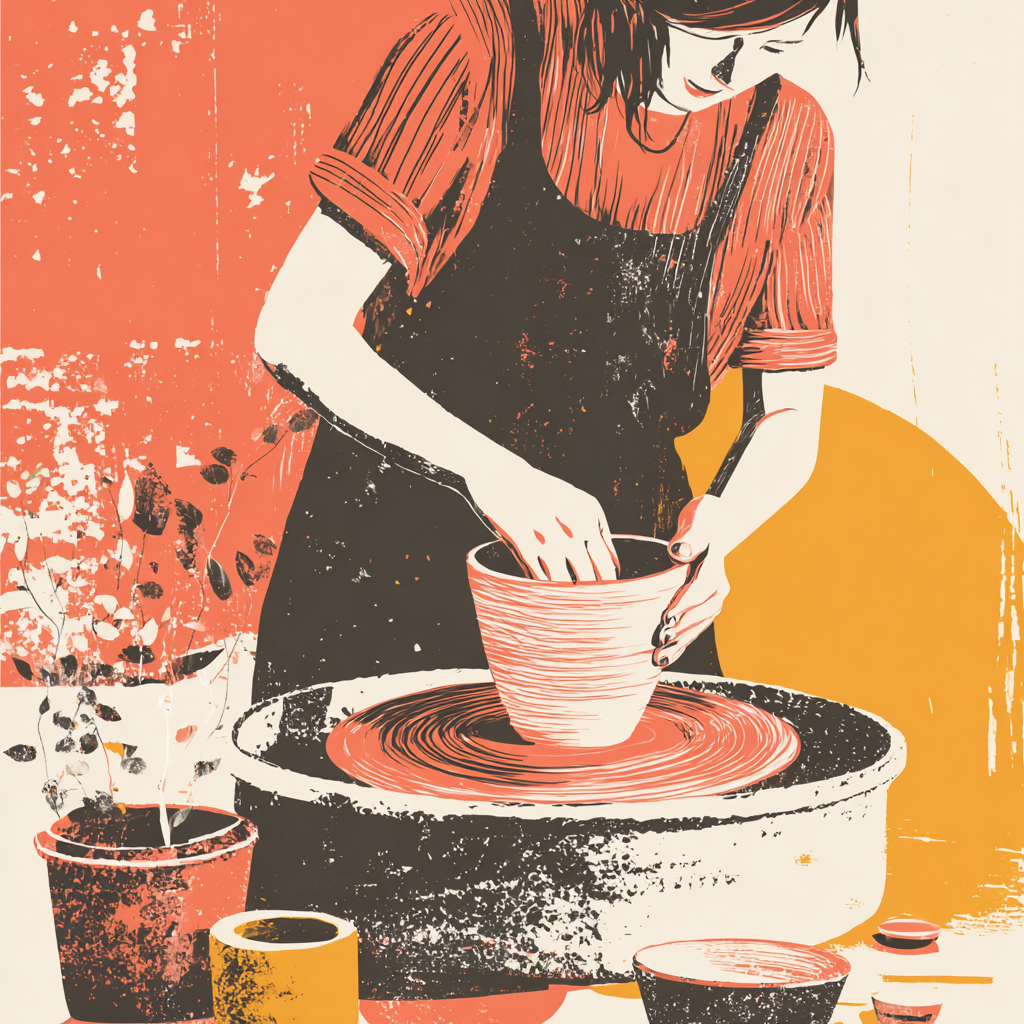
A potters’ fair represents a different kind of cultural event from a conventional exhibition. It creates a setting where viewers do not just observe finished works from a distance. They encounter objects connected to process, material, use, and the visible presence of the maker. Ceramics does not arrive in the gallery only as an abstract artistic statement. It arrives as something shaped by touch, labor, time, and physical skill. That difference changes the atmosphere of the institution and the way the audience enters it.
Why a Potters’ Fair Has News Value
The news value of such an event comes from what it suggests about the institution itself. When a regional gallery gives visible calendar space to a potters’ fair, it is making a statement about the kinds of cultural activity it wants to foreground. This is not just about adding variety to programming. It is about recognizing craft as a serious part of public cultural life.
That matters because craft events have often been treated as secondary to exhibition-making. They might be associated with workshops, market days, or community programming rather than with the central identity of the gallery. But when a fair becomes one of the noticeable events in the institutional calendar, the hierarchy starts to shift. Pottery is no longer presented as a side activity. It becomes part of the gallery’s outward-facing cultural profile.
In that sense, the event becomes a useful news case. It reflects a wider movement in which regional institutions are broadening their programming logic. They are not only presenting finished art for interpretation. They are also creating settings in which audiences can experience artistic labor, local makers, and material culture in more direct ways.
The Appeal of Material Culture in a Digital Era
The return of craft also speaks to a larger cultural mood. Audiences today live in a highly digital environment. Much of daily life takes place through screens, fast-moving content, and forms of communication that are immediate but often intangible. In such an environment, ceramics offers something different. It has weight, surface, texture, irregularity, and evidence of process. A ceramic object reminds the viewer that it was made slowly and physically. It carries marks of human handling in a way that digital culture cannot reproduce.
This is one reason pottery has gained renewed resonance. People are increasingly drawn to forms of culture that feel grounded in material reality. They respond to things that show labor rather than hide it, and to objects that do not appear infinitely replicable. A potters’ fair gives shape to that desire. It creates a public setting where handmade work can be encountered not as nostalgia, but as something timely and culturally relevant.
Why This Format Works Especially Well in a Regional Context
Regional institutions often serve a broader public role than major metropolitan museums. They are not only exhibition venues. They are also community anchors, educational spaces, gathering points, and cultural reference sites within local life. Because of that, they are especially well suited to event formats that connect artistic quality with public accessibility.
A potters’ fair fits that model well. It invites people who may not feel naturally drawn to contemporary art exhibitions but who remain very responsive to making, objects, skill, and practical beauty. It lowers barriers without lowering seriousness. Visitors can move through the event as viewers, buyers, learners, or curious participants. Families, local residents, collectors, and first-time visitors all find different points of entry.
This matters for a place like Penrith. A regional gallery builds relevance not only through curatorial ambition, but also through frequency of return, community recognition, and a sense that its program belongs to everyday cultural life. A craft event supports all of those things. It creates an occasion that feels social, tactile, and open, while still remaining rooted in artistic practice.
The Hybrid Nature of the Event
One of the strongest aspects of a potters’ fair is that it does not sit neatly in one category. It is partly exhibition, partly market, partly social gathering, and partly educational platform. That hybridity gives it unusual strength. Traditional exhibitions often separate aesthetic experience from commercial exchange, and public programming from artistic presentation. A fair allows those modes to coexist.
This makes the event especially revealing as an institutional signal. It shows that a gallery is willing to work with more fluid cultural formats rather than rely only on conventional exhibition structures. That flexibility is increasingly important, especially for regional institutions that need to connect with multiple kinds of audiences and maintain a dynamic public presence.
The hybrid format also changes the pace of engagement. Visitors do not simply pass through a display and leave. They browse, ask questions, talk to makers, compare objects, and spend time differently. The event invites a slower and more personal form of cultural attention.
Craft, Use, and Everyday Life
Ceramics has a special cultural position because it exists between art and use. Even highly expressive pottery still carries a long history of practical function. Cups, bowls, plates, vases, and vessels all belong to a tradition in which artistic value and daily life were never fully separated. That gives pottery a kind of intimacy that many other visual forms do not have.
When a gallery hosts a potters’ fair, it opens a path between institutional culture and domestic space. Visitors do not just view objects in a curated environment. They may choose to bring one into their own homes. In that moment, the relationship between gallery and public changes. The institution becomes not only a place of display, but also a mediator between artistic labor and ordinary life.
This is part of what makes the event culturally significant. It reminds audiences that art is not only something to contemplate from a distance. It can also be something used, lived with, and folded into daily rituals.
Supporting Local Cultural Ecology
A potters’ fair also strengthens the local artistic ecosystem. Many ceramic artists work in a space between studio art, design, craft tradition, and small-scale market culture. Their practices may not always fit easily into the dominant structures of contemporary exhibition-making. A fair gives them visibility without forcing their work into a format that ignores its material and functional identity.
For a regional gallery, this matters a great deal. Supporting local makers is not simply a gesture of inclusion. It is part of building a sustainable cultural environment. Events like this help connect artists with audiences, create recognition, and make the institution feel responsive to the practices that exist around it.
That support is especially valuable at a time when institutions are rethinking how they define cultural legitimacy. Craft no longer needs to sit at the edge of the program. It can help shape the public image of the gallery itself.
A Sign of Institutional Change
What makes A Potters’ Fair in Penrith important is not only the event itself, but what it reveals about the direction of regional programming. It suggests that galleries are becoming more open to material, tactile, and community-facing forms of culture without treating them as secondary. They are recognizing that handmade practice, local participation, and aesthetic accessibility can sit within the core of institutional life.
This does not mean abandoning ambitious exhibitions or contemporary discourse. It means widening the frame of what a serious cultural calendar can include. In that broader frame, ceramics is not a decorative extra. It becomes part of a more inclusive and more responsive model of regional cultural work.
Conclusion
A Potters’ Fair in Penrith can be understood as more than a craft event. It is a meaningful example of how regional institutions are rethinking the role of craft, public access, and material culture within their calendars. By giving visible space to pottery, the gallery acknowledges the importance of making, touch, use, and local artistic presence in an era dominated by digital experience and abstract cultural consumption.
That is why the event deserves attention as a news case. It shows that the return of craft is not about nostalgia. It is about relevance. It is about the growing recognition that regional institutions do not only need to exhibit art. They also need to create cultural formats that people can enter, understand, remember, and carry with them beyond the walls of the gallery.